How Long Does Concrete Take to Cure in Florida's Climate?
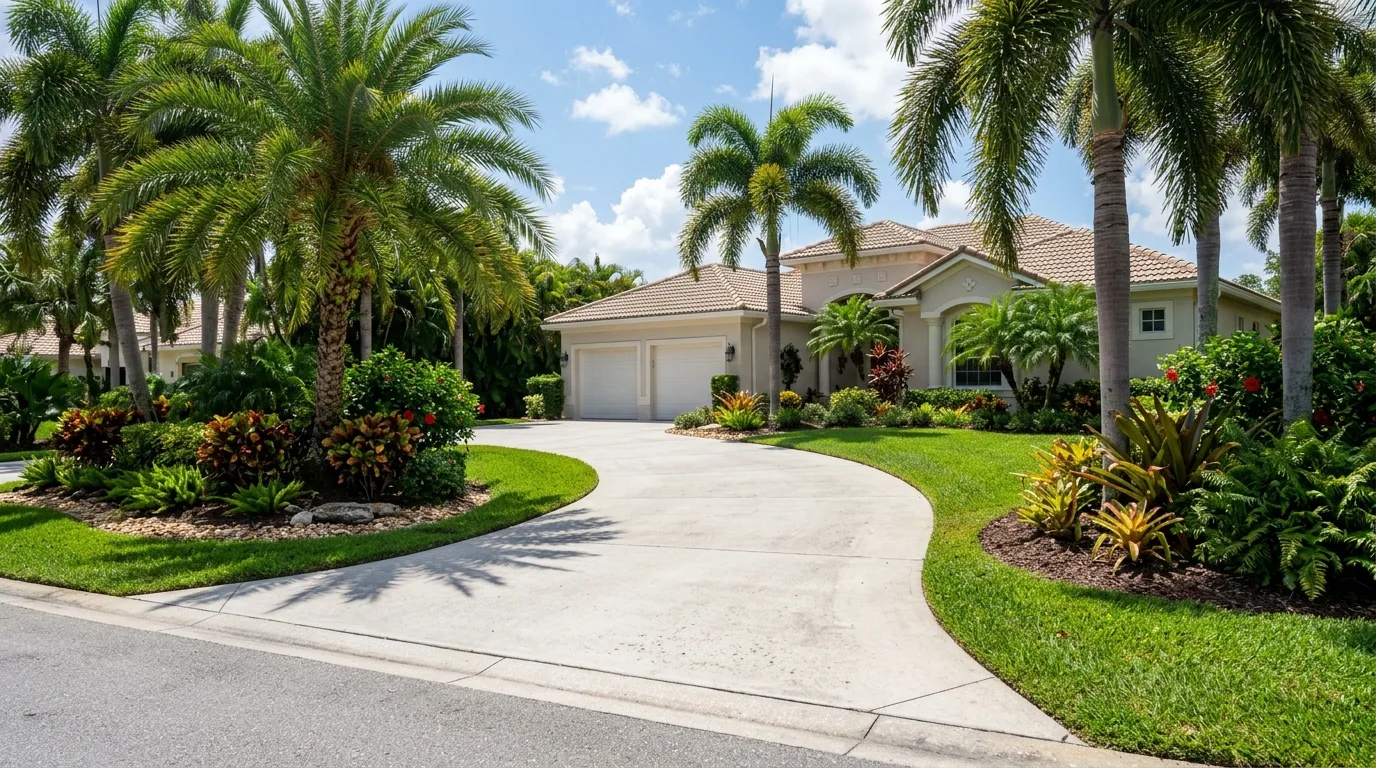
“Can I drive on my new driveway yet?” is one of the most common questions Dunedin homeowners ask after a concrete pour. The answer matters more than most people realize — loading concrete before it has reached sufficient strength can cause surface marking, cracking, and reduced long-term performance that no amount of sealing will fix. Florida’s specific climate makes the curing timeline more complicated than in northern states, and understanding it helps you set the right expectations for your concrete project.
We Explain Every Step of Your Dunedin Concrete Project
Including exactly when it's safe to use your new concrete — no guessing.
What Concrete Curing Actually Means
Curing is not the same as drying. Concrete doesn’t harden by losing moisture — it hardens through a chemical reaction called hydration, in which water molecules combine with cement particles to form calcium silicate hydrate crystals that give concrete its strength. This reaction continues for years, but the critical period for practical load-bearing strength is the first 28 days.
The reason curing conditions matter so much in Dunedin and Pinellas County is that hydration requires moisture. If concrete loses water too quickly — which Florida’s summer heat accelerates dramatically — the hydration reaction stops before the concrete reaches its design strength. A slab that was never properly cured may feel hard on the surface but have significantly reduced compressive and tensile strength that only becomes apparent when it fails prematurely under load.
Florida’s Climate Effects on Concrete Curing
Dunedin’s climate creates two opposing curing challenges depending on the season:
Summer (June–September): High temperatures accelerate the hydration reaction, which sounds positive but creates a problem. When surface temperatures exceed 85–90°F, moisture evaporates from the concrete surface faster than the hydration reaction can use it. The result: the surface layer hardens prematurely with reduced strength, surface cracking develops (called “plastic shrinkage cracking”), and the finished surface may dust or scale earlier than properly cured concrete. In Dunedin’s July and August, when heat index values regularly exceed 100°F, evaporation rates require active wet-curing measures — applying curing compound immediately after finishing, using evaporation retarders, covering the slab with wet burlap or curing blankets for the first 24–48 hours.
Florida’s humidity: Florida’s high year-round humidity actually helps concrete curing by slowing the rate of moisture evaporation compared to desert or low-humidity climates. In this respect, Pinellas County’s coastal environment is better for curing than arid climates — but this humidity benefit doesn’t overcome the accelerating effect of heat in summer.
Concrete Curing Timeline for Dunedin Projects
Here’s the practical timeline for concrete in Dunedin’s climate:
24–48 hours: Concrete has achieved initial set. Light foot traffic is generally possible after 24–48 hours, but avoid heavy foot traffic that could leave impressions in stamped concrete surfaces that haven’t fully hardened.
3–5 days: Concrete has typically reached 50–70% of its design strength. The surface is hard to the touch and won’t be marked by foot traffic. Still avoid any vehicle traffic.
7 days: The standard threshold for allowing vehicle traffic on residential driveways. At 7 days, concrete has typically reached 70–80% of design strength — sufficient for normal passenger vehicle loads. This is the minimum, not the recommended threshold — longer is better.
28 days: Concrete reaches approximately 99% of its design strength. This is when concrete should be considered “fully cured” for practical purposes. For high-load applications (heavy trucks, equipment), waiting 28 days before loading is the appropriate standard. This is also the minimum time before applying sealer to new concrete — sealing before 28 days traps moisture and prevents proper hydration completion.
90 days and beyond: Concrete continues gaining minor additional strength. The old rule of thumb that “concrete hardens forever” is approximately correct — the gain is greatest in the first 28 days and continues at a declining rate for years.
Curing Practices Used on Dunedin Concrete Projects
Questions About Your Dunedin Concrete Timeline?
We walk every client through the project schedule including curing requirements.
Professional concrete contractors in Dunedin use specific practices to ensure proper curing in Florida’s climate:
Curing compound: A liquid membrane-forming compound is applied to the freshly finished concrete surface immediately after finishing to seal in moisture. This is the standard approach for most concrete flatwork in Pinellas County and prevents the rapid moisture loss that Florida’s sun and heat cause on unprotected fresh concrete.
Wet curing: For summer pours or stamped concrete work where surface quality is critical, wet curing — keeping the concrete surface continuously moist with wet burlap, curing blankets, or misting for 3–7 days — provides the best curing conditions. More labor-intensive than curing compound, but delivers better surface quality and strength development in hot conditions.
Shade and wind protection: Wind accelerates evaporation even in humid climates. For summer pours in exposed locations, temporary windbreaks or shade cloth can reduce evaporation rates meaningfully during the first 24 hours of curing.
Delayed vehicle access: Despite homeowner eagerness to use a new driveway, we communicate clearly that 7 days is the minimum for vehicles and 28 days is the ideal threshold. Setting this expectation at the start of the project prevents the compromised curing that results from early loading.
What Happens if Concrete Cures Incorrectly in Dunedin
The consequences of improper curing show up over time, not immediately. Concrete that lost moisture too quickly during the first 24–48 hours may appear fine initially but will show: reduced surface hardness (dusting, scaling, or spalling within 2–5 years), plastic shrinkage cracks visible within the first week, and reduced structural strength that becomes apparent when the slab is loaded under normal service conditions.
In Dunedin’s climate — where UV exposure and wet-dry cycles apply continuous stress to concrete surfaces — the gap between properly and improperly cured concrete is wider than in more forgiving climates. Concrete in Pinellas County needs every advantage it can get, and proper curing is the free advantage that proper installation provides.
Frequently Asked Questions About Concrete Curing in Florida
Can I drive on new concrete in Florida before 7 days?
Technically, concrete at 5–6 days has reached significant strength, and light-duty vehicles (passenger cars, pickup trucks) typically don’t cause damage. But 7 days is the standard recommendation because it provides a safety margin for variations in curing conditions — particularly in summer heat. Heavy vehicles, loaded trucks, or vehicles with hard rubber tires should always wait the full 7 days minimum.
Why is the 28-day rule important for sealing concrete in Dunedin?
Sealing before 28 days traps moisture inside the concrete and prevents the hydration reaction from completing. The result is concrete that appears sealed but hasn’t reached its design strength — particularly a problem in Florida where UV exposure immediately tests the surface of newly placed concrete. We schedule sealing applications at 28 days or later on all our Dunedin projects.
Does Florida’s heat make concrete stronger or weaker?
Hot weather accelerates early strength gain, which initially sounds better. But if the heat causes rapid moisture loss that outpaces hydration, the concrete achieves less of its potential strength than it would in cooler, properly moist conditions. Properly wet-cured concrete in Florida’s heat can achieve full design strength; improperly cured concrete in summer heat may achieve only 60–80% of its design strength.
Related:
- Best Time for Concrete Work in Dunedin & Pinellas County
- Concrete Driveway Cost in Dunedin FL (2026)
- Concrete Repair in Dunedin, FL
Properly Cured Concrete — Every Project in Dunedin
Call Dunedin Concrete Pros at (888) 376-0955 for concrete installation that follows proper curing practices in Pinellas County.