Best Time for Concrete Work in Dunedin & Pinellas County
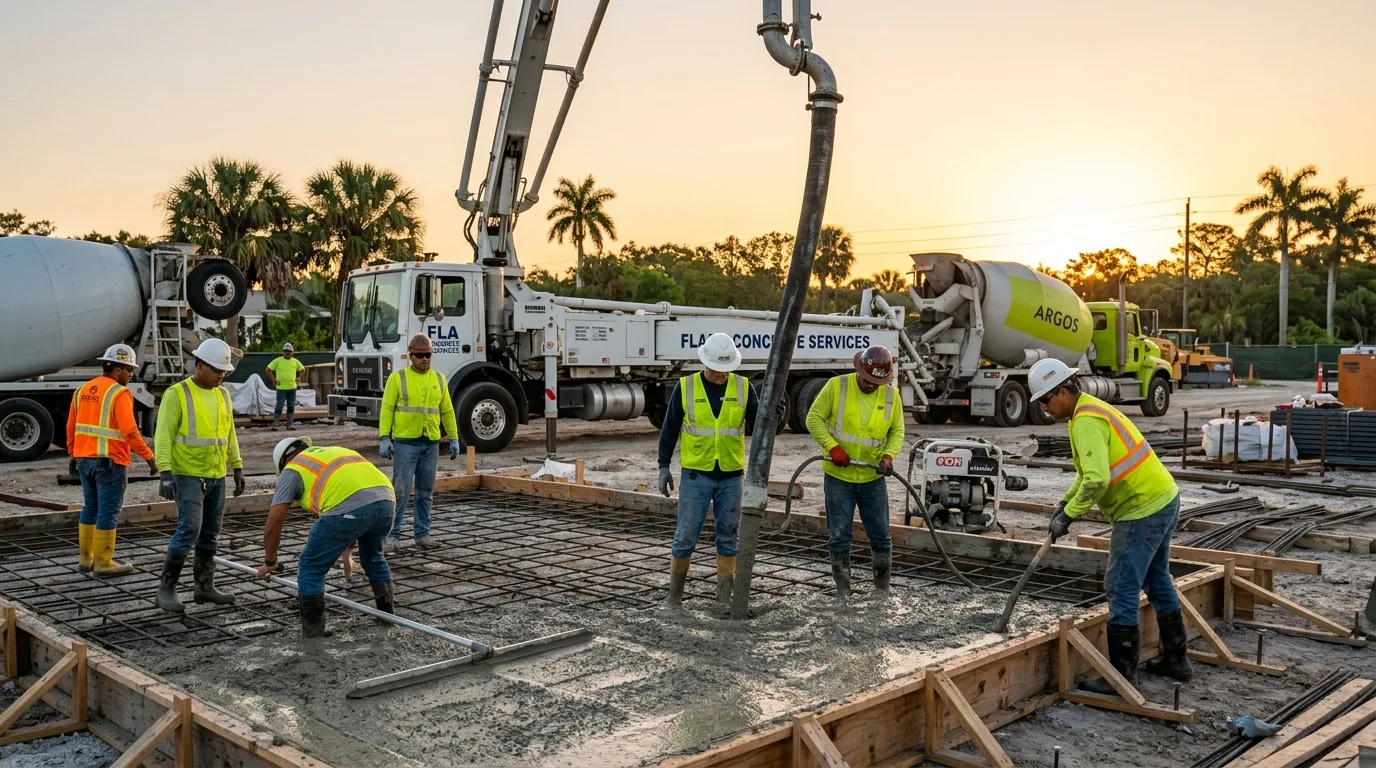
If you’re planning a concrete driveway, patio, or slab in Dunedin, timing your project isn’t just a scheduling convenience — it’s a factor in how well the concrete cures and how long it lasts. Florida’s climate divides the year into two very different construction windows, and understanding the difference can save you from delays, compromised curing, and unnecessary project headaches. Here’s what Pinellas County homeowners need to know about seasonal timing for concrete work.
Schedule Your Dunedin Concrete Project Today
We work year-round and help you choose the best window for your specific project.
The Two Seasons That Define Concrete Scheduling in Dunedin
Dunedin’s climate splits cleanly into two concrete-relevant seasons: a dry season that runs from roughly November through early May, and a rainy season that runs from late May through early October. These are the actual dates used by the National Weather Service for West Central Florida’s rainy season — not a rough approximation — and they align almost exactly with the ideal and challenging windows for concrete work.
Dry season (November – early May): Temperatures range from the low 60s to the mid-80s — nearly ideal concrete conditions. Humidity is significantly lower than summer. Afternoon thunderstorms are rare or absent. This is the optimal window for all concrete work in Dunedin, particularly large pours, decorative stamped concrete, and projects that require multiple days of work.
Rainy season (late May – early October): Dunedin’s rainy season begins around May 25th each year and runs through early October. Daily afternoon thunderstorms — predictable in timing but not always in intensity — disrupt pour scheduling, deposit water on fresh concrete, and create high-humidity curing conditions that require adjustments to standard procedures. This is the challenging window, not an impossible one, but it requires more planning and scheduling flexibility.
Why Florida’s Summer Heat and Rain Affect Concrete
Concrete cures best between 50°F and 85°F with moderate humidity. Both temperature extremes create problems: cold temperatures slow hydration (less relevant in Dunedin), and high temperatures accelerate moisture loss, which can compromise the hydration process that gives concrete its strength.
In Dunedin’s summer, two specific problems occur. First, afternoon ambient temperatures above 90°F with heat indices exceeding 100°F cause the concrete surface to lose moisture faster than the mix can sustain proper hydration — resulting in surface cracking and reduced compressive strength if wet curing practices aren’t used. Second, the daily thunderstorm pattern (typically developing between 2 and 5 PM) means morning pours finish just as afternoon rain risk peaks. Rain on fresh concrete before it has hardened sufficiently can wash away surface material, mar finishes, and dilute the surface layer — a particular concern for stamped and decorative concrete where surface quality matters.
In the Pinellas Trail corridor running through Downtown Dunedin and in the established neighborhoods of Barrington Hills, tree shade mitigates some summer heat exposure during curing — but doesn’t eliminate the thunderstorm risk that defines rainy season scheduling.
Best Months for Concrete Work in Dunedin
Here’s how the Dunedin concrete season breaks down month by month:
October – November: The ideal transition months. Temperatures begin moderating, rain frequency drops significantly, and humidity falls. Fall is arguably the single best window for concrete work in Dunedin — cooler temperatures, dry conditions, and often better contractor availability and pricing as summer demand drops. Projects scheduled in October and November consistently have the fewest weather delays.
December – February: Excellent concrete weather in Dunedin. Temperatures occasionally dip into the 50s at night — still within the acceptable range for concrete work. Cold fronts bring low humidity that’s actually favorable for curing. Very low rain risk. Prime scheduling window if you’re planning a driveway or patio in advance.
March – April: Spring scheduling works well. Temperatures are pleasant, rain is infrequent, and concrete cures predictably. Demand begins increasing as homeowners plan spring projects — earlier scheduling gives you better contractor availability and pricing.
May: The edge of the acceptable window. Most concrete work can still be completed, but late May begins the rainy season transition. Early May projects are usually fine; late May projects should be monitored closely for thunderstorm timing.
June – September: Florida’s rainy season. Daily afternoon thunderstorms create scheduling uncertainty. High temperature and humidity require wet curing practices and careful scheduling. Large pours and decorative concrete are best avoided in these months. Small repairs, crack filling, and modest flatwork can often be completed during dry morning windows.
Practical Scheduling Tips for Dunedin Homeowners
Ready to Schedule Your Concrete Project in Dunedin?
We plan around Florida's weather patterns — call (888) 376-0955 to discuss your timeline.
Regardless of season, here are concrete scheduling practices that apply in Dunedin throughout the year:
Schedule morning starts: In any season, concrete pours in Dunedin should start early — 7–8 AM is typical. This gives maximum daylight for the pour and finishing work and provides the greatest buffer before afternoon thunderstorm development during the rainy season.
Build weather flexibility into your timeline: Especially for rainy season projects, expect possible one-day delays when weather doesn’t cooperate. A contractor who commits to an absolute date regardless of weather conditions isn’t being realistic about Florida’s scheduling.
Allow full cure time regardless of season: Concrete needs 7 days before vehicle traffic and 28 days for full design strength — this timeline doesn’t compress in hot weather (in fact, hot weather requires slower curing via wet curing methods). Don’t let contractors tell you it’s ready faster than this.
Seal at the right time: New concrete should not be sealed until it has cured for at least 28 days. For stamped concrete, UV-resistant sealer should be applied after full cure — scheduling the sealing application in a dry window.
Cost and Availability Considerations by Season
Concrete pricing in Dunedin doesn’t vary dramatically by season, but contractor availability does. October through December and March through April are the busiest periods for concrete work — scheduling 4–8 weeks ahead is prudent. June through September (the rainy season) typically has better contractor availability, and some contractors offer modest pricing flexibility during slower summer months. If your project can tolerate the summer scheduling challenges, the off-peak window can offer both better availability and occasionally better pricing.
Frequently Asked Questions About Concrete Timing in Dunedin
Can I pour concrete in the summer in Dunedin?
Yes — summer concrete work in Dunedin is possible with proper planning. Early morning pours, wet curing practices, and flexibility for weather delays allow most concrete projects to be completed during the rainy season. We don’t recommend scheduling large decorative or stamped concrete pours in July and August, when thunderstorm risk and heat are at their peak, but standard flatwork can be managed year-round.
What’s the worst month for concrete work in Dunedin?
July and August are the most challenging months in Dunedin for concrete work. Peak heat, peak humidity, and the highest frequency of afternoon thunderstorms combine to create the most scheduling and curing challenges. That said, repairs and small projects are routinely completed in these months.
Does concrete cure faster in Florida’s heat?
Heat accelerates the chemical hydration reaction but also accelerates moisture evaporation. In Florida’s summer, the net effect is that concrete gains early strength faster but may not reach full design strength if moisture loss outpaces hydration. This is why wet curing — keeping the concrete surface moist during curing — is standard practice for Dunedin summer pours.
Related:
- Concrete Driveway Cost in Dunedin FL (2026)
- How Long Does Concrete Take to Cure in Florida’s Climate?
- Do I Need a Permit for Concrete Work in Dunedin FL?
Plan Your Dunedin Concrete Project the Right Way
Call Dunedin Concrete Pros at (888) 376-0955 — we schedule around Florida's weather patterns to get your project done right.