Concrete vs. Asphalt Driveways for Florida Homes
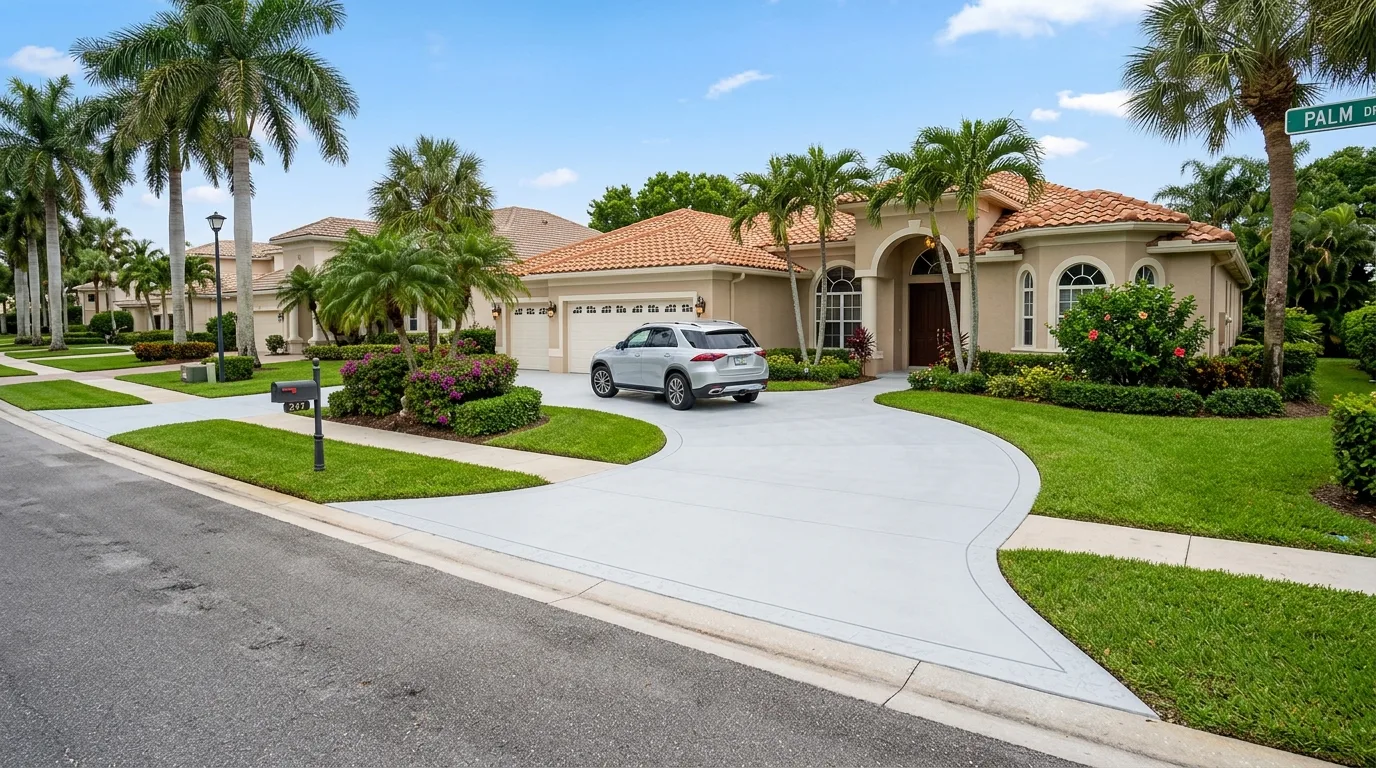
Florida’s climate eliminates most of the reasons that asphalt performs well in northern states. The same properties that make asphalt a sensible choice in cold climates — its flexibility in freeze-thaw cycles — become liabilities in Dunedin and Pinellas County, where summer heat softens asphalt surfaces until they deform under vehicle loads. This post compares concrete and asphalt driveways head-to-head for Florida homeowners: upfront cost, performance in our climate, maintenance requirements, and 20-year lifecycle cost.
Free Concrete Driveway Estimates in Dunedin
Dunedin Concrete Pros installs concrete driveways built specifically for Florida's coastal climate.
Why Climate Matters for Driveway Material Selection
The conventional wisdom that “concrete vs. asphalt is a personal preference” holds in moderate climates. In Dunedin and throughout Pinellas County, concrete wins the performance comparison because of three climate-specific factors that consistently disadvantage asphalt in Florida’s conditions.
First, summer heat. Dunedin’s average high in July is 91°F, and the pavement surface temperature of asphalt under direct Florida sun regularly exceeds 150°F. At these temperatures, asphalt softens enough to deform under parked vehicles — tires leave impressions, kickstands sink, and the surface develops ruts in high-traffic areas. Concrete, which remains rigid in heat, doesn’t exhibit this behavior.
Second, UV exposure. Asphalt’s binder degrades under UV radiation, causing surface oxidation and cracking that requires resealing every 3–5 years. Florida’s year-round UV exposure accelerates this process significantly compared to northern states. Concrete is not affected by UV degradation in the same way — although surface wear does occur without sealing, structural integrity is unaffected by sun exposure.
Third, petroleum products. Florida’s tropical environment means more vehicles with older seals, more lawn equipment, more outdoor cooking. Gasoline, oil, and petroleum-based fluids dissolve asphalt’s binder on contact, creating permanent surface damage. Concrete is resistant to petroleum staining and not structurally affected by fuel spills.
Cost Comparison: Concrete vs. Asphalt in Dunedin, FL
Concrete driveway upfront cost: $8–$18 per square foot installed in Dunedin. A standard 600 sq ft double driveway runs $4,800–$10,800 depending on thickness, finish, and site prep requirements. See our full concrete driveway cost guide for Dunedin for a detailed breakdown.
Asphalt driveway upfront cost: $4–$8 per square foot installed in Dunedin. A 600 sq ft driveway runs $2,400–$4,800. Asphalt’s upfront cost advantage is real — typically 40–60% lower than comparable concrete.
Where the math shifts — lifecycle cost: Asphalt requires resealing every 3–5 years ($200–$500 per application), resurfacing every 10–15 years ($3–$6 per sq ft), and full replacement every 15–20 years. Concrete requires sealing every 3–5 years ($150–$350 per application) and full replacement after 30–50 years. Over 30 years in Dunedin’s climate, the lifecycle cost of asphalt — including multiple resealings, one or two resurfacings, and potential full replacement — often equals or exceeds the upfront cost of a concrete driveway that remains structurally intact through the same period.
Practical Performance Differences for Dunedin Homeowners
- Asphalt in Dunedin summers: Surfaces reach temperatures above 150°F and can soften enough to show tire impressions from parked vehicles. Properties in the Dunedin Isles neighborhood with limited shade are particularly susceptible. For families with heavy vehicles, boats on trailers, or motorcycles with kickstands, asphalt deformation is a real maintenance issue.
- Concrete in Dunedin summers: Maintains rigidity in heat, though white or light-colored concrete reflects more heat and is more comfortable underfoot barefoot than asphalt. Darker concrete (integral color) can absorb more heat but still outperforms asphalt on structural stability.
- Asphalt and Dunedin’s rainy season: Asphalt that hasn’t been properly sealed allows water infiltration that erodes the sub-base — a significant concern in Pinellas County’s sandy soils where sub-base material can wash out during the rainy season. Edge deterioration is common when drainage is inadequate.
- Concrete and coastal salt air: Pinellas County’s coastal proximity means salt air exposure. Concrete near the Dunedin waterfront should be sealed with a penetrating sealer that resists chloride intrusion — which can accelerate rebar corrosion in insufficiently covered steel. We specify cover depth and sealer type for coastal concrete installations.
How the Installation Process Differs
Concrete installation in Dunedin requires more sub-grade preparation than asphalt: deeper excavation (typically 8–10 inches for gravel plus 4-inch concrete versus 6–8 inches for gravel plus 2–3 inches of asphalt), longer cure time (7 days before vehicle use versus 24–48 hours for asphalt), and careful scheduling around Florida’s afternoon thunderstorm pattern. The upfront process is more demanding and more expensive.
Asphalt installation is faster and less process-intensive. The surface can be used within 24–48 hours. However, in Pinellas County’s sandy soils, asphalt requires the same compacted gravel base as concrete — contractors who skip this step to reduce cost produce asphalt that deforms and cracks quickly in Florida’s wet-dry soil cycles.
Concrete Driveways in Dunedin — The Florida-Smart Choice
Call (888) 376-0955 for a free estimate. We build concrete driveways that outlast asphalt in Pinellas County's conditions.
When Asphalt Makes Sense in Dunedin
Asphalt isn’t automatically the wrong choice in Dunedin — but it’s the right choice in fewer situations than the upfront cost difference suggests. Asphalt makes the most sense when budget constraints make the upfront cost of concrete impossible, when the driveway is for a property that won’t be held long-term, or for commercial applications where resurfacing is factored into the maintenance budget. For homeowners planning to stay in their Dunedin property long-term, the 20-year lifecycle math almost always favors concrete.
Frequently Asked Questions: Concrete vs. Asphalt in Florida
Does concrete crack more than asphalt in Florida?
Concrete can crack from settling, heat expansion, or sub-base failure. However, properly installed concrete with correct expansion joints and adequate base preparation cracks significantly less than commonly assumed. Asphalt also cracks — and is more susceptible to Florida’s UV and heat degradation. Both materials crack when improperly installed; properly installed concrete has a significantly longer serviceable life in Florida’s climate.
How long does a concrete driveway last in Dunedin vs. asphalt?
A concrete driveway properly installed in Dunedin lasts 30–50 years with routine sealing. Asphalt in Florida’s climate lasts 15–20 years before requiring full replacement. The concrete driveway’s lifespan advantage is particularly pronounced in Pinellas County because of the specific heat, UV, and soil conditions that accelerate asphalt degradation.
Is concrete worth the extra upfront cost in Dunedin?
For homeowners planning to own their Dunedin property for 10+ years, concrete is almost always worth the upfront premium. The 20–30 year lifecycle cost advantage — combined with the practical performance benefits of a driveway that doesn’t soften in Florida’s heat — typically justifies the initial investment. For properties held short-term, the math shifts toward asphalt.
Related:
- Concrete Driveway Cost in Dunedin FL (2026)
- Concrete vs. Pavers for Dunedin Driveways: Cost & Durability
- Concrete Driveways in Dunedin, FL
Make the Florida-Smart Driveway Choice
Contact Dunedin Concrete Pros at (888) 376-0955 for a free concrete driveway estimate in Dunedin and Pinellas County.