5 Signs Your Dunedin Home Needs Concrete Foundation Repair
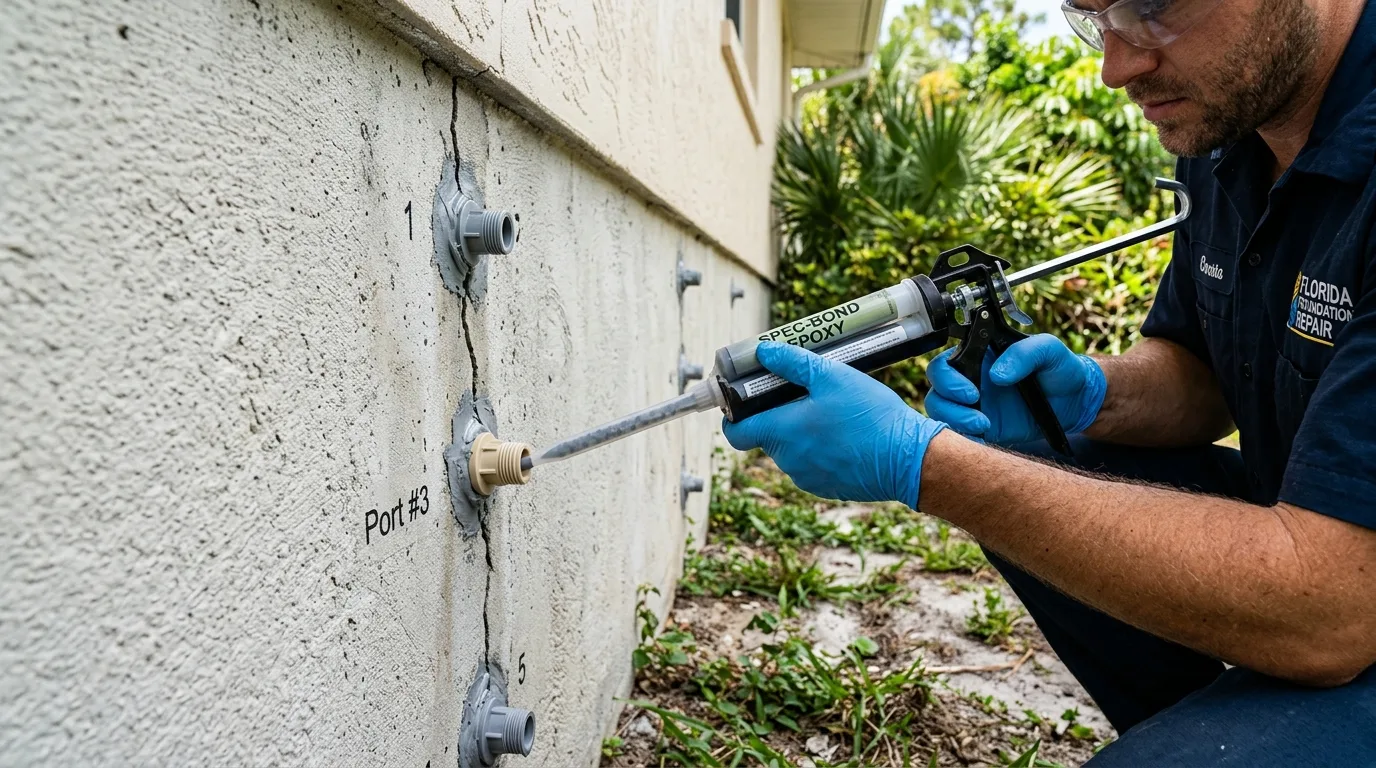
By the time a concrete foundation problem becomes obvious, it’s usually been developing for months — or years. Dunedin homeowners who catch foundation issues early save thousands in repair costs compared to those who wait until cracks have widened, walls have shifted, or drainage has permanently undermined the slab. In this post, we cover the five most reliable warning signs that your Dunedin home’s concrete foundation needs attention, why Pinellas County’s specific soil conditions make these issues common, and what the repair process looks like.
Concerned About Your Foundation in Dunedin?
Free foundation assessments for Dunedin homeowners — we'll give you an honest evaluation, not a sales pitch.
Why Foundation Repair Issues Are Common in Dunedin, FL
Dunedin and the broader Pinellas County area sit on sandy coastal soils that create predictable foundation challenges for homeowners throughout the region. Unlike clay soils in other parts of Florida, Pinellas County’s predominantly sandy sub-grade drains quickly but provides poor natural compaction under structural loads. When Florida’s rainy season raises the water table between late May and early October, the saturated soil beneath concrete slabs and foundations loses bearing capacity — allowing slabs to flex and micro-cracks to develop.
The cycle then reverses: dry-season conditions cause the same sandy soil to contract slightly and pull away from concrete edges, creating small voids that grow with each subsequent wet-dry cycle. Older homes in the Ranchwood Estates and Virginia Park neighborhoods — built before modern base preparation standards were common — are particularly susceptible to this cycle because their foundations were often poured without adequate compacted gravel bases to break the direct contact between the slab and the native sandy soil.
Foundation issues in Dunedin are compounded by Florida’s intense UV exposure and heat. Concrete that isn’t sealed regularly absorbs UV radiation that breaks down the cement paste at the surface, accelerating spalling and making existing cracks more vulnerable to water infiltration. Catching the warning signs early is the most cost-effective approach in this climate.
5 Warning Signs to Watch For
Here are the five most reliable indicators that your Dunedin home’s concrete foundation needs professional assessment:
Sign 1 — Cracks in interior walls or door frames: Diagonal cracks running from the corners of door frames or windows, or stair-step cracks in masonry, indicate differential foundation movement — sections of the foundation are settling at different rates. Pinellas County homeowners should pay particular attention to cracks that appear or widen after a particularly wet rainy season, which often indicates soil saturation undermining foundation bearing capacity.
Sign 2 — Doors or windows that stick or won’t close properly: When a foundation settles unevenly, door frames and window openings shift out of square. A door that previously operated freely but now sticks seasonally is often an early foundation indicator rather than a wood swelling problem. In Dunedin’s humidity, both issues happen — but if sticking is accompanied by any wall cracks, foundation movement is the more likely cause.
Sign 3 — Visible cracks in the concrete slab itself: Hairline cracks are normal in concrete flatwork and don’t always indicate structural problems. Concerning patterns include: cracks wider than ¼ inch, cracks that have grown measurably over several months, cracks that run the full width of a slab section, and cracks accompanied by differential height between the two sides. Wide cracks on a Dunedin foundation slab that appear after a particularly dry winter — when sandy soil contracts — warrant immediate assessment.
Sign 4 — Water infiltration at foundation edges or through floor cracks: Water entering through foundation cracks is both a symptom and an accelerating cause. Once water gains access through a crack during Dunedin’s heavy rainy season, it erodes the sandy sub-base, washes out the compacted gravel base, and enlarges the crack from below. Foundation-edge water infiltration in Dunedin’s low-lying areas near Honeymoon Island State Park or the Dunedin Causeway is a serious indicator that sub-base drainage has failed.
Sign 5 — Sloping or bouncy floors: Floors that slope noticeably toward one area or feel springy underfoot often indicate a void has formed beneath the concrete slab. When Pinellas County’s sandy soil erodes away from beneath a foundation, the slab spans the void like a bridge — flexing under load until it eventually cracks. A hollow sound when tapping on a concrete floor is another indicator of a sub-slab void.
How Foundation Repair Works in Dunedin
Get a Foundation Assessment in Dunedin
Honest diagnosis first — we assess the root cause before recommending any repair approach.
Concrete foundation repair in Dunedin depends on accurately diagnosing what’s driving the problem. Surface crack filling addresses cosmetic issues but won’t resolve structural movement — which is why thorough assessment before repair is critical. The main repair approaches available to Dunedin homeowners include:
Mudjacking (slab lifting): A slurry of cement, soil, and water is pumped through holes drilled in the slab to fill sub-slab voids and lift settled sections. Effective for slabs that have settled uniformly without cracking through their full depth. Works best in Dunedin’s sandy soils where the void beneath is accessible and the slab is otherwise structurally intact.
Polyurethane foam injection: Expanding polyurethane foam is injected beneath the slab to lift and stabilize it. Faster and less invasive than mudjacking, with smaller injection holes. Effective for moderate settlement in residential applications across Pinellas County.
Full slab replacement: When a foundation slab has cracked through its full depth, settled more than an inch, or been undermined by severe sub-base erosion, replacement is more cost-effective than repair. New slabs installed in Dunedin should include the compacted gravel base, vapor barrier, and reinforcement that prevent the original failure from recurring.
Cost of Foundation Repair in Dunedin, FL
Foundation repair costs vary enormously based on scope. Crack filling for isolated surface cracks starts at $150–$400. Mudjacking for settled slab sections typically runs $3–$8 per square foot for the lifted area. Full slab replacement for a 400 sq ft area costs $8–$15 per square foot including demolition and proper base preparation.
The most important cost factor is timing: a foundation problem addressed at the first warning sign costs dramatically less than the same problem addressed after two or three additional Florida rainy seasons have expanded the damage. Across Clearwater, Safety Harbor, and greater Dunedin, early assessment is the highest-value action a homeowner can take when foundation indicators appear.
Frequently Asked Questions About Foundation Repair in Dunedin
How do I know if my foundation needs repair or if cracks are normal?
Normal settlement cracks are hairline-thin, haven’t grown, and don’t have height differences between the two sides. Concerning cracks are wider than ¼ inch, have grown measurably, show differential elevation, or are accompanied by door/window sticking or interior wall cracks. The safest approach when you’re uncertain is a professional assessment — most foundation assessments in Dunedin are free and take about 30 minutes.
Do I need a permit for foundation repair in Dunedin FL?
Surface crack filling and minor spall repair typically don’t require a Dunedin building permit. Structural repairs involving slab lifting or full slab section replacement generally require a permit under the City of Dunedin’s building code. We determine permit requirements during the free estimate and handle all permit coordination for permitted work.
How long does foundation repair last in Pinellas County?
Done correctly and addressing the root cause (drainage correction, sub-base stabilization), foundation repairs in Pinellas County last 10–25 years or longer. A repair that addresses only the surface without fixing the drainage or sub-base issue that caused the problem will recur within 3–7 years. We always assess and address the root cause before recommending a repair approach.
Related:
- Concrete Slabs & Foundations in Dunedin
- Why Dunedin’s Sandy Soil Requires Expert Concrete Prep
- Concrete Repair vs. Replacement: What’s Best for Your Dunedin Home
Don't Wait Until Small Cracks Become Big Problems
Call Dunedin Concrete Pros at (888) 376-0955 for a free foundation assessment anywhere in Pinellas County.